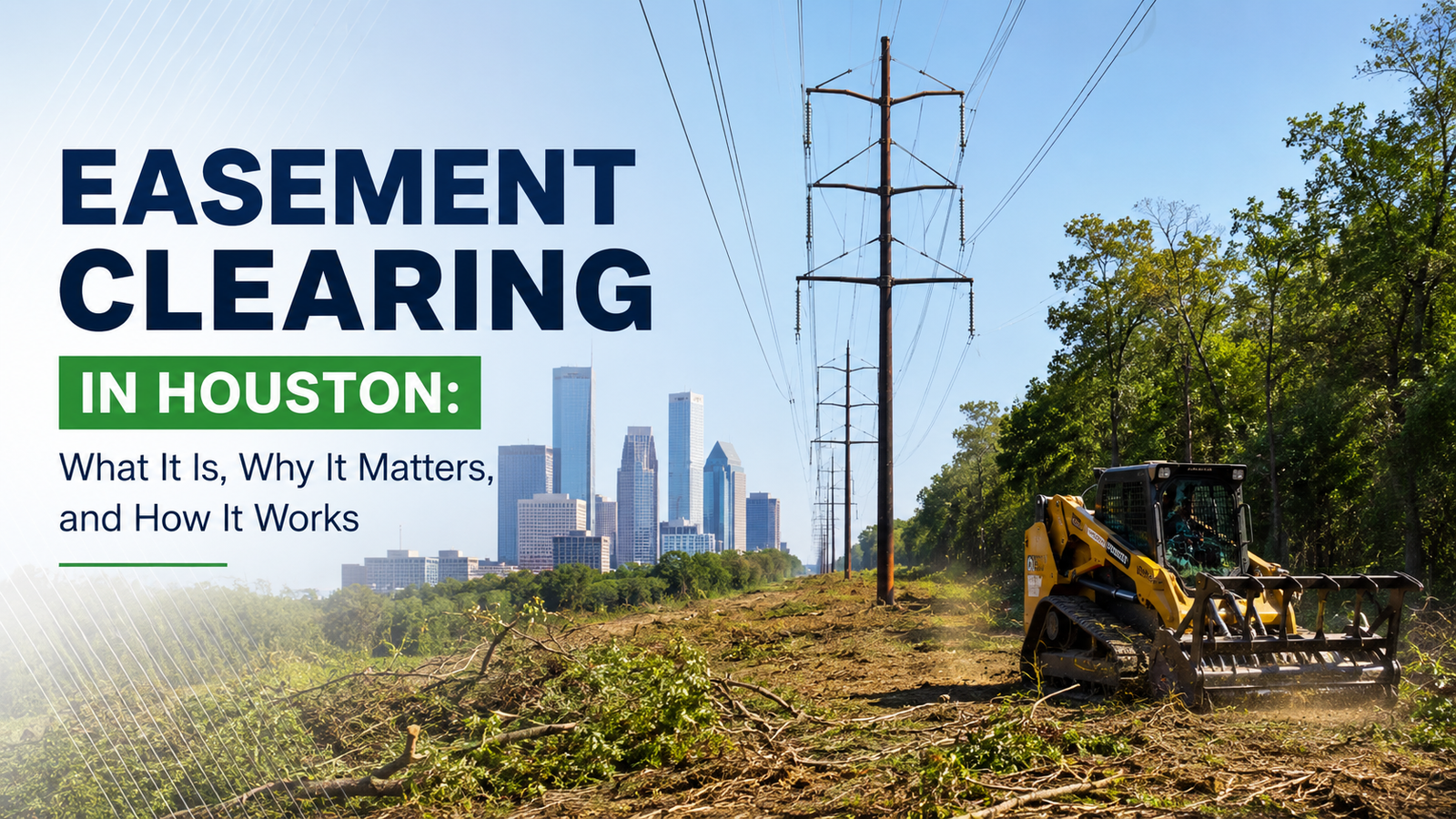
Across Houston’s urban neighborhoods, sprawling suburbs, and rural counties, a network of legal corridors runs beneath the visible landscape strips of land reserved for utility lines, pipelines, drainage infrastructure, and access purposes. These strips are called easements, and they create obligations for property owners and rights for the entities that use them. Easement Clearing Houston the regular clearing and maintenance of vegetation within these corridors is a critical but often overlooked aspect of property management and infrastructure maintenance throughout the Greater Houston area.
Understanding Easements in Houston and Texas
An easement is a legal right to use another person’s land for a specific, defined purpose. In Texas, easements are a fundamental feature of property law and infrastructure management. They exist as recorded interests in real property meaning they follow the land rather than the person, surviving changes in property ownership. Texas A&M University’s property law resources describe an easement as “a right, privilege or advantage in real property, existing distinct from the ownership of the land.”
In the Houston metropolitan area, several types of easements are particularly common. Utility easements grant electric, gas, water, and telecommunications companies the right to install, maintain, and access their infrastructure crossing private property. CenterPoint Energy holds extensive easement networks for natural gas and electric transmission lines across the region. The City of Houston and Harris County hold easements for water, sewer, and stormwater infrastructure.
Pipeline easements are especially significant in the Greater Houston area given the region’s role as the center of the U.S. petroleum and petrochemical industry. Thousands of miles of pipeline easements cross Harris County and surrounding areas, running through residential neighborhoods, commercial properties, agricultural land, and industrial zones. These easements require regular maintenance clearing to ensure operators can monitor pipelines, access them for maintenance, and detect leaks or other problems without vegetation obstruction.
Drainage easements serve a critical function in Houston’s flood management infrastructure. Given the region’s flat topography, high rainfall, and susceptibility to flooding, the network of drainage ditches, channels, and bayous that carry stormwater away from developed areas is extensive. Many of these features run through private property under easements held by Harris County Flood Control District or the City of Houston, and vegetation within these easements must be managed to maintain flow capacity and allow inspection and maintenance access.
Why Easement Clearing Is Necessary
Vegetation within easements does not maintain itself it grows. In Houston’s warm, humid climate with abundant rainfall, vegetation growth is vigorous year-round. Unchecked, brush, trees, and tall grass within easements can reach the point where the infrastructure they protect is inaccessible, where overhead clearance requirements are violated, or where roots threaten buried infrastructure.
For utility easements, vegetation management is a safety and reliability requirement. Overhead electric transmission lines need to maintain specific clearance distances from tree limbs to prevent contact that can cause outages and fires. For pipeline easements, clear lines of sight along the corridor allow aerial patrol used by operators to identify leaks, encroachments, and other problems. A pipeline corridor overgrown with trees and dense brush makes aerial monitoring difficult and access for ground-level inspection substantially slower. For drainage easements, channels and ditches choked with vegetation have reduced flow capacity, affecting the region’s ability to manage stormwater during rain events a lesson powerfully reinforced during Hurricane Harvey.
The Easement Clearing Process in Houston
Easement clearing begins with a review of the easement documents the recorded instruments that define the easement boundaries, permitted uses, and any specific requirements for maintenance. Understanding the exact dimensions and permitted activities within an easement is important before clearing work begins.
Utility locating is a mandatory step before any ground disturbance within an easement. Texas law requires notification through DIGTESS/811 before digging, and within pipeline or utility easements where the very infrastructure that makes the easement necessary is buried this notification is especially critical. The clearing method depends on the easement type, vegetation density, access constraints, and the clearing standard required. Forestry mulching efficiently processes trees, brush, and stumps in a single pass without the debris hauling that conventional cutting requires, making it particularly efficient for overgrown easements where brush and small trees have established over a period without maintenance.
Easement Clearing Requirements and Property Owner Obligations
Property owners in Houston who have easements on their land have specific obligations regarding the easement corridor. The easement instrument typically grants the easement holder the right to access and maintain the corridor, and property owners may be required to refrain from activities that would obstruct this access. Planting trees within a utility or pipeline easement is typically prohibited, as is installing fences, structures, or paved surfaces within certain easements.
Harris County Flood Control District issues notices to property owners along drainage channels when vegetation or debris is obstructing the drainage function. Property owners who receive these notices are responsible for clearing the obstruction, and HCFCD can perform the clearing and bill the property owner if the owner fails to do so. For commercial properties, HOA-managed communities, and larger landholdings, easement clearing maintenance is typically addressed through contracted maintenance programs that provide scheduled clearing at appropriate intervals.
Common Questions About Easement Clearing in Houston
Who is responsible for clearing an easement on my Houston property the utility company or me? Responsibility depends on the specific easement language. For utility easements, the utility company typically has the right to clear the corridor and often does so through its own vegetation management programs. For drainage easements, the obligation often falls on the property owner unless the drainage feature is actively maintained by HCFCD or the city. Review your easement documents or consult with a real estate attorney for clarity on your specific situation.
Can I plant trees or build structures within an easement on my property? Generally no, for most utility and pipeline easements. The easement instrument typically restricts activities that would interfere with the easement holder’s use and maintenance access. Trees and structures within utility or pipeline easements may need to be removed at the property owner’s expense if they violate easement conditions.
What equipment is typically used for easement clearing in Houston? Equipment selection depends on easement width, vegetation type, and access constraints. Forestry mulchers on tracked machines are highly efficient for easement corridors with brush and small trees. Compact mulching equipment can access narrow easements and tight locations. Mowing tractors handle regularly maintained open easements efficiently.